Summary:
The Sustainability Revolution Hidden in Plain Sight
Every demolished building in Long Island generates approximately 4.5 tons of brick waste, with traditional disposal methods consuming landfill space while requiring energy-intensive manufacturing to create replacement paving materials. Crushed brick gravel interrupts this wasteful cycle by transforming demolished structures into permeable paving that performs better than virgin materials in Long Island’s challenging environment. The crushing process creates angular particles that lock together naturally, forming stable surfaces without requiring cement binding agents that contribute 8% of global carbon emissions. Each ton of crushed brick gravel prevents 1.2 tons of CO2 emissions compared to manufacturing equivalent concrete pavers, while the permeable surface allows 15-20 gallons per square foot per hour of water infiltration that recharges Long Island’s critical aquifer systems. Troffa Materials Corporation sources brick from carefully selected demolition projects, removing mortar residue and contaminants to create clean aggregate that meets ASTM standards for paving applications. The result transforms environmental liability into landscape asset, creating beautiful surfaces that tell the story of Long Island’s architectural heritage while building resilience against future climate challenges.
Solving Long Island's Flooding Crisis Through Smart Material Choices
Nassau County experiences flooding events 60% more frequently than 20 years ago, with impermeable surfaces contributing to the stormwater overload that overwhelms municipal drainage systems. Crushed brick gravel’s angular texture creates void spaces that capture rainfall immediately, preventing the sheet flow that causes basement flooding and street ponding. Laboratory testing confirms crushed brick surfaces infiltrate water at rates exceeding 18 inches per hour, compared to zero infiltration from concrete or asphalt installations.
Installation Simplicity That Saves Time and Money
Nassau County experiences flooding events 60% more frequently than 20 years ago, with impermeable surfaces contributing to the stormwater overload that overwhelms municipal drainage systems. Crushed brick gravel’s angular texture creates void spaces that capture rainfall immediately, preventing the sheet flow that causes basement flooding and street ponding. Laboratory testing confirms crushed brick surfaces infiltrate water at rates exceeding 18 inches per hour, compared to zero infiltration from concrete or asphalt installations.
Performance Advantages That Outshine Traditional Materials
Long Island’s freeze-thaw cycles create expansion and contraction forces that crack rigid paving materials, leading to costly repairs within 5-7 years of installation. Crushed brick gravel’s flexible nature accommodates these thermal movements without structural failure, maintaining smooth surfaces through decades of seasonal temperature swings. The material’s natural drainage prevents ice formation that makes concrete and asphalt surfaces hazardous during winter months, while its textured surface provides traction that improves safety year-round. Salt application damages traditional materials through chemical corrosion, but crushed brick gravel’s fired clay composition resists salt damage while requiring 50% less deicing material due to superior drainage characteristics. Heat island reduction represents another significant advantage, with crushed brick surfaces registering 15-20 degrees cooler than asphalt during summer months, reducing cooling costs for adjacent buildings while creating more comfortable outdoor environments. Troffa Materials Corporation crushed brick gravel undergoes sizing analysis to optimize particle distribution, creating surfaces that compact to 98% density while maintaining porosity for drainage performance.
Color and Texture Options That Honor Long Island's Heritage
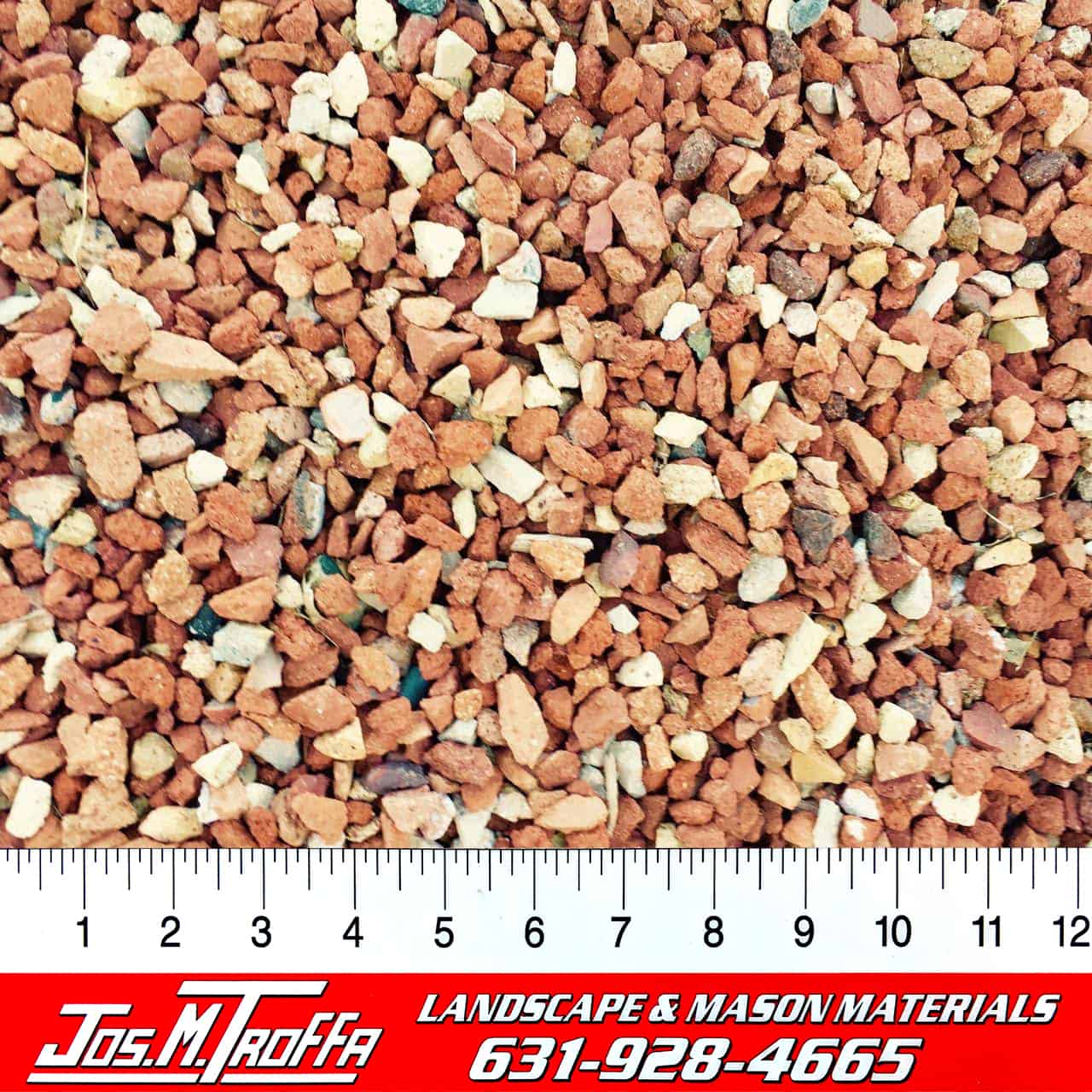
Historic Long Island brick ranges from deep burgundy Colonial-era clay to warm orange Nassau County farmhouse brick, with weathering patterns that create natural color variation impossible to replicate in manufactured materials. Troffa’s sorting process separates brick by era and origin, allowing custom blends that match your property’s architectural period. Wire-cut brick creates angular textures, while hand-molded varieties provide softer, more organic appearances that complement cottage-style landscaping.
Long-Term Value Through Regenerative Design
Property appraisers increasingly recognize sustainable improvements as value-adding features, with permeable paving qualifying for LEED credits and green building certifications that attract environmentally conscious buyers. Crushed brick gravel’s 30-50 year lifespan exceeds most traditional materials while requiring minimal maintenance beyond occasional surface raking. The material’s ability to support plant growth around edges creates natural integration with landscape beds, eliminating the harsh transitions common with rigid paving systems.
Build Your Future on Yesterday's Foundation
Crushed brick gravel represents more than sustainable paving—it embodies circular economy principles that transform waste into wonder while solving practical problems through natural solutions. Long Island homeowners gain beautiful, functional surfaces that honor architectural heritage while building resilience against flooding, heat, and climate change impacts. The cost savings, installation simplicity, and environmental benefits create compelling reasons to choose reclaimed materials over resource-intensive alternatives. Contact Troffa Materials Corporation today to explore how crushed brick gravel can transform your outdoor spaces while contributing to Long Island’s sustainable future through materials that connect past craftsmanship with tomorrow’s environmental stewardship.